
November 2026
What if the phone that lasts the longest was also the most competitive?
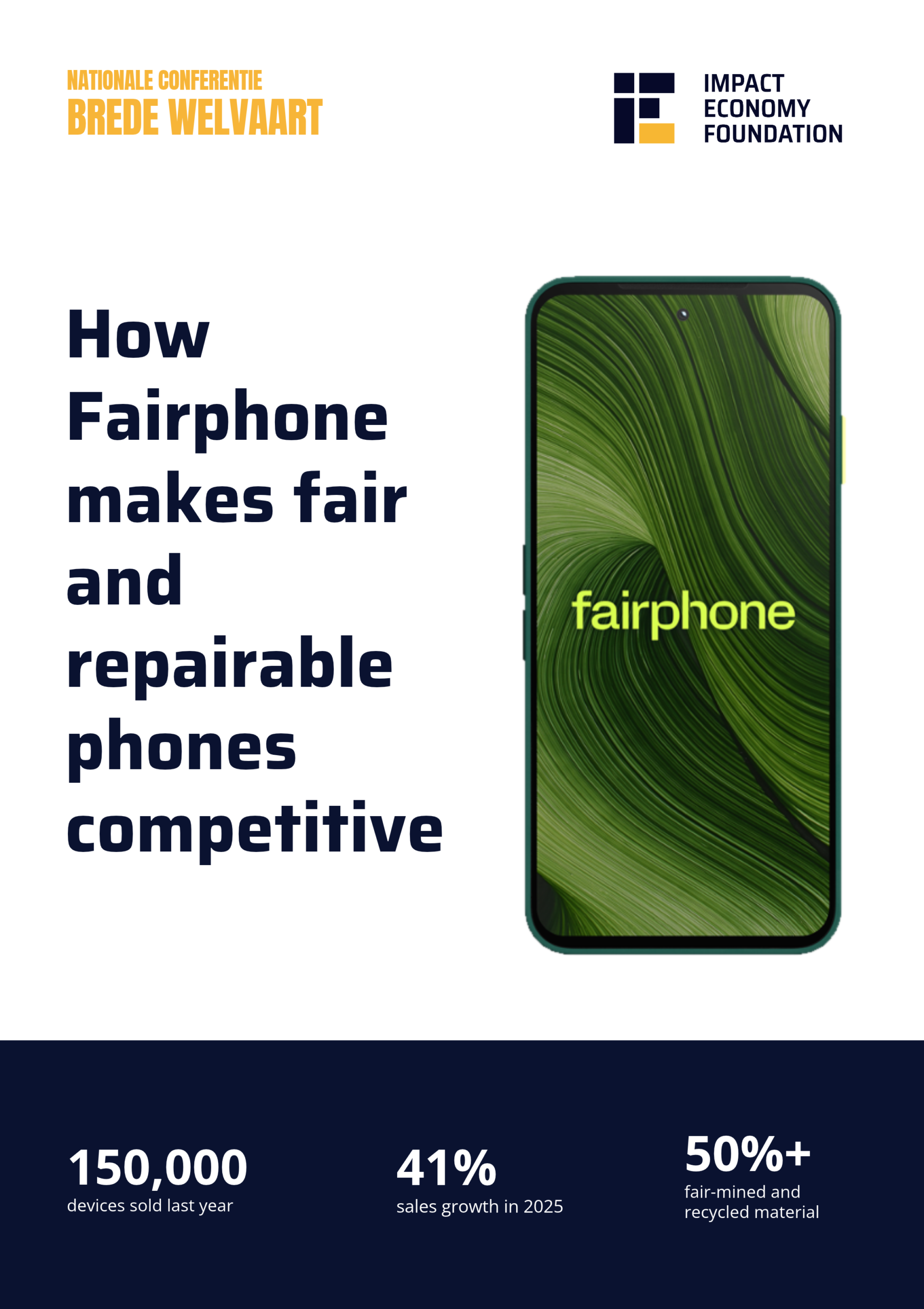
Fairphone, the maker of repairable, fairly sourced smartphones, is working hard to make this a reality. Last year it sold 150,000 devices, up from just over 100,000 the year before, a rise of more than 40%. Most buyers of the new Gen 6 were new to the brand, all while the overall smartphone market shrank. In an interview, Monique Lempers, Chief Impact & Operating Officer at Fairphone, explains what it takes to make fair and repairable phones the standard.
How Fairphone competes
“For a long time, ethical was seen as second best, and repairable as more fragile,” says Lempers. “We countered that logic and proved that you don’t have to compromise on performance.” The new Gen 6 is made of over 50% fair-mined and recycled material, and its carbon footprint is down from 42 to 29 kg CO₂e.
Growth does come with a tradeoff. Fairphone aimed to cut company-wide emissions by 12% but reached 7.3%, mainly because it grew so much faster. Across the industry, though, the picture changes: in a shrinking market, Fairphone’s phones are replacing conventional ones rather than adding to them. “That’s how we can systemically reduce the overall footprint of the market,” says Lempers.
The barrier of scale
The main obstacle is not fairness but economies of scale. Large manufacturers buy in volumes that lower costs and have more leverage over suppliers. The costs of fairness are relatively limited: fair materials, living wage payments, modularity and longer software support add roughly $21 to $23 per phone, on top of a typical cost price of $300 to $400. Living wage bonuses alone cost just over $1 per phone.
Market transformation
Growth is only the first step. The next requires a shift in market rules:
- Governments as launching customers through Public Procurement
- Smarter right-to-repair regulations
- Tax incentives that reward circularity
Making the most impactful, the most competitive
Fairphone has shown that a fair and repairable phone can compete. Its next steps are to extend the life of its devices, raise its share of fairly sourced materials, and take on new minerals such as nickel and tantalum. The next step for the market is to reward it, so that competing on impact is no longer the exception.
Monique Lempers will join the executive panel at the National Conference on Broad Prosperity.

